Earring Display Card Template: Graphics & Print Templates
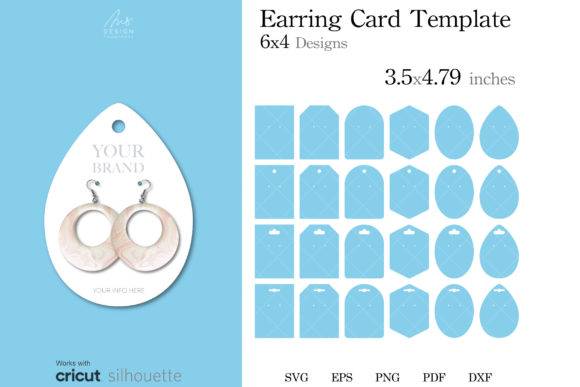
As a graphic designer who frequently collaborates with handmade jewelry artisans and boutique owners, my first step in any branding project is evaluating the tactile elements of the product experience. Recently, I was tasked with refreshing the visual identity for a local artisan launching a new line of minimalist stud earrings. The client needed packaging that felt premium yet approachable, something that could be produced efficiently in-house without sacrificing professional polish. Upon reviewing the Earring Display Card Template, my immediate impression was one of functional elegance. This isn't just a cut file; it is a foundational graphic design asset that bridges the gap between digital planning and physical product presentation.
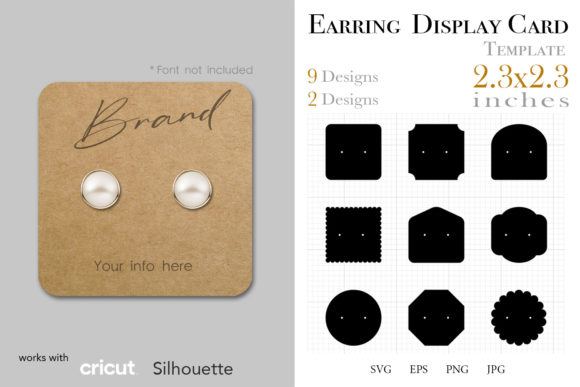
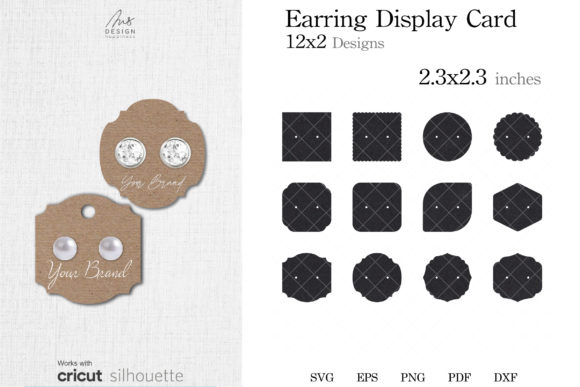
The mood this template creates is inherently clean and organized, which is crucial for jewelry where the product itself must remain the hero. The 2.3×2.3 inch dimensions are standard enough to fit industry norms but specific enough to require precision. In terms of style, it represents a modern, utilitarian aesthetic that fits perfectly within the current trend of sustainable, small-batch production. For a client operating an Etsy shop or a pop-up booth at a local craft fair, this type of Print Templates solution offers a significant advantage over generic, mass-produced cards. It allows for total customization of the brand story right at the point of sale.
Integrating the Asset into Real-World Brand Identity
In a real design situation, the utility of this file extends far beyond the card itself. When developing a comprehensive brand identity, consistency is key. I evaluated how this Earring Display Card Template would perform across various touchpoints. While its primary function is as an Earring Packaging Template SVG, the geometric simplicity of the layout makes it versatile. For instance, the hole placement and border ratios can inspire the layout of social media graphics on Instagram, creating a cohesive visual language between the physical product and the digital storefront.
For Cricut users and crafters running a handmade business, the inclusion of Jewelry card DXF cut files is a game-changer. It eliminates the need to manually trace shapes or guess measurements, ensuring that every card cut is identical. This level of precision is vital when scaling from a hobby to a commercial operation. I also considered its application in product mockups. By importing the vector data into design software, I could quickly generate realistic previews for the client's website, showing how their logo would look centered on the card before a single piece of cardstock was cut.
The template serves as an excellent base for packaging design that needs to feel personal. Whether used for sticker design overlays or as a backing for sublimation design techniques, the clean lines provide a perfect canvas. It works exceptionally well for seasonal campaigns where the background color of the card might change to match a holiday theme, while the structural integrity of the design remains constant. This adaptability makes it a valuable component of any design bundle aimed at small business owners.
Strategic Placement and Visual Hierarchy
Understanding where this asset shines is critical for effective deployment. The Earring Display Card Template works best in large layout areas where the focus is on product presentation, such as hero graphics on a landing page or detailed shots in an editorial catalog. It excels as a decorative accent in themed collections, providing a uniform look that elevates the perceived value of the jewelry. In marketing visuals, using a consistent card design helps build recognition; customers begin to associate that specific silhouette with the brand's quality.
However, there are scenarios where this asset must be used with caution. Because the format is fixed at 2.3×2.3 inches, it is not suitable for crowded layouts where text density is high. Attempting to force complex logo design elements or lengthy care instructions onto this small surface can destroy the visual hierarchy. It is also less ideal for minimalist branding projects that rely on vast negative space if the pre-defined hole punches interfere with the intended composition. Furthermore, in professional corporate materials that require rigid adherence to specific non-standard sizing, this template might need significant modification.
The impact on readability and brand consistency is profound when used correctly. A well-designed card acts as a silent salesman, reinforcing trust and professionalism. If the card feels flimsy or the cuts are uneven, it detracts from the jewelry. Conversely, a crisp, perfectly aligned card enhances the emotional appeal of the purchase. It signals to the customer that the creator cares about every detail, fostering audience engagement and encouraging repeat business.
Pr Designer Notes and Technical Evaluation
Before approving this digital product for a client project, I ran through a rigorous checklist of practical designer notes. First, I tested the design in black and white to ensure that the structural lines held up without the crutch of color. This is essential for commercial design where printing costs might limit ink usage. I checked the contrast on both light and dark backgrounds to verify versatility for different brand palettes.
Previewing the file at various sizes confirmed that the vector paths in the SVG design and EPS formats were clean and scalable. While the primary use is specific, the ability to scale the vector without pixelation is a hallmark of a high-quality creative design asset. I also inspected the PNG design files included for transparency; having a ready-to-use raster version speeds up the creation of digital ads and Pinterest pins.
Comparing this template against various typography styles revealed interesting pairings. It complements sans serif fonts beautifully, maintaining a modern edge, but can also soften the look of a handwritten font, adding a touch of whimsy appropriate for boutique items. However, heavy display fonts might overwhelm the small surface area. Crucially, I verified the commercial licensing. For any print-on-demand seller or digital seller looking to include this in their own Canva template offerings or sell finished goods, confirming the commercial license is non-negotiable to avoid legal pitfalls in the creative marketplace.
Ultimately, the Earring Display Card Template proves to be a robust tool for professionals. It streamlines the workflow for web design mockups and physical production alike. By offering formats like pdf for hand cutting alongside machine-ready files, it accommodates businesses at every stage of growth. Whether you are a seasoned designer managing a design assets library or a new entrepreneur launching your first Etsy product, this template provides the structural foundation needed to create a polished, memorable brand experience.