Review: 32 Earring Display Card for Craft Business
As a designer who spends more time staring at stitch maps than most people care to admit, I approach new digital embroidery file collections with a healthy dose of skepticism. We have all downloaded a "perfect" design only to find it turns into a bird's nest on the machine or looks pixelated when resized. Recently, I got my hands on the 32 Earring Display Card set to evaluate its potential for real-world application. This isn't just a quick glance at a thumbnail; this is a deep dive into how these graphics translate from screen to thread, specifically for those of us running small shops or creating handmade products.
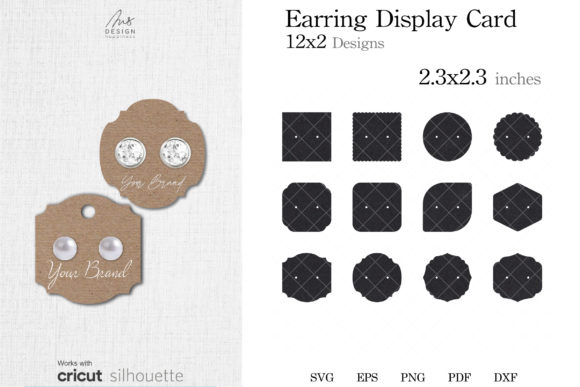
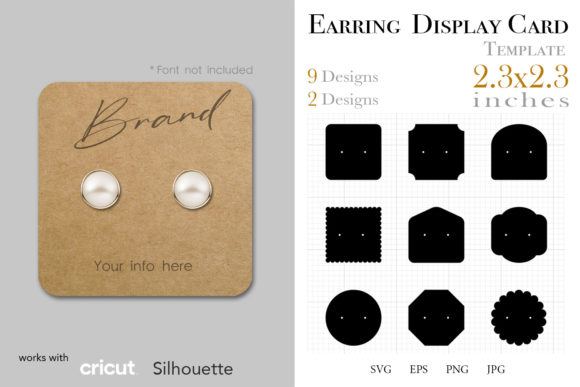
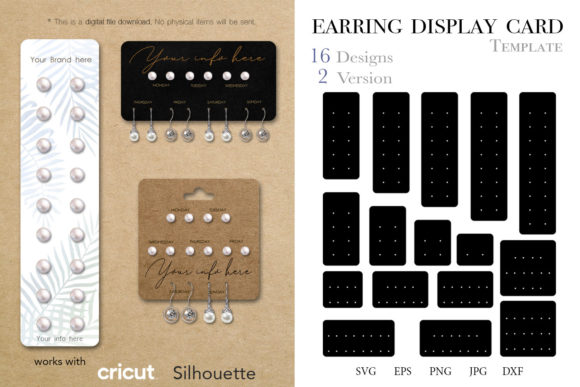
The first thing that strikes you about this collection is the sheer volume and variety. Receiving 32 individual files across multiple formats—SVG, PNG, JPG, and DXF—plus consolidated EPS and SVG bundles, suggests a workflow designed for flexibility. For an Etsy seller or a boutique owner, having options is crucial. Whether you are cutting vinyl for a physical display stand or using the vector data to create a printable mockup for your online store, the file diversity here is a significant plus. However, since my primary focus is embroidery, I immediately looked past the raster images to see how these shapes would hold up as a machine embroidery design.
Visual Personality and Design Layout
The mood of the 32 Earring Display Card collection leans heavily toward clean, modern minimalism. In the world of jewelry presentation, less is often more. You want the customer's eye drawn to the product, not distracted by an overly busy background. These designs respect that principle. The layouts appear open and airy, providing ample negative space which is critical when you are dealing with fabric texture. If you plan to embroider these onto linen tote bags or textured canvas, a dense, complicated background would get lost. These cards seem to offer the clarity needed to maintain professionalism.
From a thematic standpoint, the variety within the 32 designs allows for seasonal rotation. You aren't stuck with one look. This is vital for holiday embroidery projects or limited-edition drops. Imagine offering a special edition earring set for Valentine's Day with a specific card design, then switching to a fresh spring aesthetic in March. The visual personality here feels adaptable, fitting seamlessly into both high-end boutique branding and casual craft fair setups.
Real-World Application: The Boutique Scenario
To truly test the viability of these assets, I envisioned a specific project: launching a new line of handmade polymer clay earrings for a local pop-up shop. The goal was to create a cohesive brand experience where the packaging felt as premium as the jewelry itself. While the 32 Earring Display Card files are primarily graphics, the opportunity to incorporate embroidered elements into the packaging or accompanying merchandise is where the value shines.
Consider using these designs to create custom embroidered patches that can be pinned to the display cards, or perhaps embroidering the logo directly onto small velvet pouches that accompany the earrings. If you are selling custom apparel alongside your jewelry, such as branded t-shirts or aprons for your studio, these graphics serve as excellent source material. The clean lines suggest they would digitize well into a satin stitch border or a simple running stitch outline, keeping the production cost low while maintaining a high perceived value.
For a small shop product line, consistency is key. Using one of the 32 designs as a recurring motif on your tote bag design inventory helps customers instantly recognize your brand. If a customer buys a pair of earrings and sees the same geometric motif on their shopping bag and their thank-you card, that builds trust. It signals that attention to detail was paid to every touchpoint of the purchase experience.
Technical Considerations for Embroidery
While the provided files are largely graphics (SVG, PNG, etc.), any serious craft business owner knows that turning these into stitched items requires careful planning. If you intend to use these shapes for an applique design or convert them into a stitch file, you must consider stitch density. Small, intricate details found in some of the 32 variations might not survive the transition to thread if they are too fine. On a sweatshirt embroidery project, for instance, thick fleece can swallow tiny text or thin lines. I recommend testing a single design on scrap fabric that matches your final product before committing to a full run.
Fabric choice plays a massive role here. These designs would likely shine on stable, medium-weight fabrics like cotton twill or denim. However, if you are attempting baby embroidery on soft knits, you need to be cautious. Stretchy fabrics require robust stabilization. Without the right stabilizer, even the cleanest vector shape can pucker and distort, ruining the finished product. Furthermore, when working on curved surfaces like caps, the layout of the design matters. A wide, horizontal card design might need to be broken up or simplified to fit the limited hoop size of a cap frame.
Color contrast is another factor. Many of these display card concepts rely on subtlety. When translating this to thread, ensure your thread colors pop against the fabric. A dark grey design on a black tote bag will vanish. Always test your digitized version in black and white first to check for clarity. If the shapes blur together without color, the design needs adjustment before it hits the machine.
Commercial Viability and Branding
For commercial embroidery professionals, time is money. The fact that this package includes consolidated files (2 EPS and 2 SVG containing all designs) streamlines the workflow. You can quickly batch-process these for client proofs or generate a catalog of options without opening thirty separate windows. This efficiency translates directly to better margins.
Moreover, the professional look of these Print Templates and Graphics elevates the perceived value of your goods. Customers are willing to pay more for items that look curated and intentional. An earring displayed on a generic piece of cardboard feels cheap; the same earring on a custom-designed, potentially embroidered-accented card feels like a luxury item. This psychological boost is essential for creative entrepreneurs trying to compete in a saturated market.
However, a word of caution regarding licensing: always verify the terms before selling items made with these designs. While the file formats suggest versatility for both personal and commercial use, assumptions can be costly. Ensure you understand if there are limits on the number of physical items you can sell or if attribution is required.
Final Verdict for Makers
The 32 Earring Display Card collection is a robust toolkit for the modern maker. It bridges the gap between digital design and physical presentation. While it is marketed heavily towards print and display, the underlying geometry and thoughtful layout make it a strong candidate for embroidery adaptation. Whether you are creating a personalized gift, stocking your holiday inventory, or refining your boutique's branding, these assets provide a solid foundation.
My advice is to start small. Pick three designs from the set that resonate with your current brand aesthetic. Digitize them carefully, paying close attention to underlay and pull compensation. Test them on your intended fabric, whether it's a sturdy canvas for a market bag or a soft flannel for a baby gift. Once you confirm the stitch quality, you will find that these designs do more than just hold earrings; they tell your brand's story. In the hands of a skilled operator, this collection transforms from simple files into tangible assets that drive engagement and sales.